News + Reviews

How to spa like the sports stars
Posted in Press
Rory McIlroy’s nail-biting victory in the Masters last month was five-star drama but what sticks in my memory most is the champion crediting motivational texts from the sport psychologist Bob Rotella with helping him to keep his cool after his six-shot lead evaporated during the tournament.
Isn’t it fascinating that, for all their success and supportive entourages, even elite athletes can be so plagued by nerves and negative thoughts that they need professional input? Could such strategies help us with everyday struggles? I think we all know the answer to that.
The reality though — at least for me — is that putting in the legwork to find a good psychologist is like reading Ulysses: nice idea but I’m never actually going to get around to doing it. Guess I’ll never wear the green jacket of the Masters winner. Or maybe I might; because these days spas are offering expert psychological advice.
I don’t mean life coaches. Spas have had those for years and I’m sure there are many fine ones, but I’ve only met the sort that suggest you manifest yourself a romance/promotion/calorie-free chocolate. The growing global discussion on mental health, however, is encouraging pioneering spas to think bigger and recruit clinical psychologists.
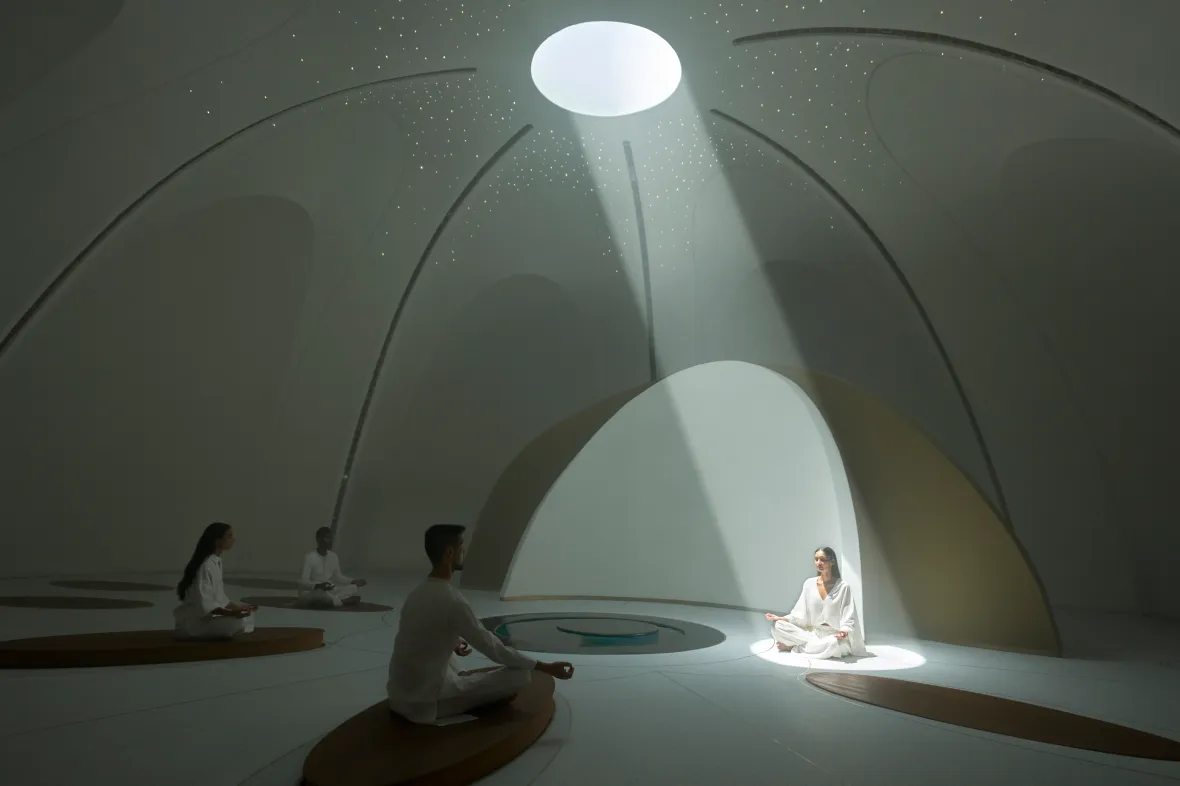
Zem in Spain (zemaltea.com), for example, opened last year with a resident psychologist and I’ve just been to Tulah in Kerala (tulah.life), another glamorous newcomer, which includes an emotional wellbeing screening with a qualified psychologist in every programme. I chatted to Dr Annu Choudhary about tactics to write that novel I’ve been going on about for years. She suggested a visual cue by my computer (I decided against a copy of Ulysses) to encourage me to spend the first 30 minutes at my screen every day on creative writing. It’s working. Well, mostly.
It’s not the only technique used by sports stars that translates well for those of us who have never been on a podium. There’s also breathwork, for example. It requires minimal instruction, it instantly sharpens focus and it’s the ultimate Martini option: you can do it any time, any place, anywhere.
Before the 2019/20 season, when he was the Liverpool football manager, Jürgen Klopp brought in high-wave surfer Sebastian Steudtner to demonstrate the benefits of breath control. Steudtner used underwater exercises to teach the squad how to master the panic and hold their breath once submerged. Their times went up from barely ten seconds at the start to nearly four minutes and taught them how to click into a calm and focused mindset in high-pressure moments during matches. They ended up winning the club’s first league title in 30 years that summer.
You may also have noticed the Ireland rugby team getting into a huddle during games. They’re practising box breath (inhaling for four seconds, holding for four, exhaling for four and holding for four) to stay in control.
I’ve been a breathwork convert since a retreat in Lanzarote in 2018 with the affable Alan Dolan, aka the Breath Guru (breathguru.com). I learnt the connected breathing method: inhaling deeply through an open mouth and exhaling gently, as if to fog a mirror, continuously for 30 minutes. That’s harder than it sounds, but the reward is an initial sense of euphoria followed by lasting clarity. If you don’t fancy the Canaries, Dolan holds workshops and free events in London.
And while I’m not ready to take penalties for Liverpool, I enjoyed the challenge of underwater breathwork at Nihi Sumba (nihi.com). Other quirky options at this barefoot Indonesian hideaway include breathwork sessions on horseback. Full disclosure: I’m a very nervous novice so it was a neigh from me for that one.
However, I did sign up for horse-whispering at Le Barn in Bonelles, Parisians’ answer to a Pig hotel (lebarnhotel.com). I used eye contact and body language to communicate with my hulk of a horse. It was scary but strangely meditative. Canine therapy is similarly therapeutic and Reggie the cavapoo acted as the unofficial emotional support dog for the England women’s football team during last year’s successful Euros campaign.
The former England men’s football manager Gareth Southgate, on the other hand, introduced Pilates to the national squad. His successor, Thomas Tuchel, is also a fan. It’s not just about core strength; they both believe it improves mental focus and enhances recovery too. My Pilates picks are Suvretta House in Switzerland, where its next-gen hybrid reformers made me satisfyingly achy (suvrettahouse.ch), and Absolute Sanctuary on Koh Samui, an affordable Thai resort that delivers such world-class Pilates and yoga that many Brits are regulars (healingholidays.com).
Or you could go route one at the Peligoni Club on Zakynthos (peligoni.com). You’ll primarily be there for the five-star blood, sweat and tears inspiration of bootcamp leaders such as the Olympians Chris Hoy and Rebecca Adlington. Fortunately, recovery is trending right now so there’ll be plenty of time for cooling down in the turquoise Ionian, rehydrating at the beach bar and protein-maxxing at its alfresco restaurants.
Tottenham Hotspur’s footballers will definitely be looking forward to the beach after a dismal season. And I imagine many are relieved that the club has brought in Roberto De Zerbi as manager, rather than going back to ex-coach Mauricio Pochettino, as was rumoured at one point. Pochettino’s preparations for the 2019 Champions League final included a firewalk, an ancient wellness ritual that involves walking over burning embers to test mental resolve. They lost 2-0 to Liverpool. Should have tried breathwork.
This month…
● I’ve been tracking my body composition with PHYT, an AI-powered app that delivers impressively accurate stats on body fat, muscle index, bone mass and metabolic rate in seconds. It’s a powerful incentive to stay in shape (phytapp.com)
● I’ve discovered Sisterly Tribe, ethical Scandi workout gear in gorgeous muted colours (sisterlytribe.com). Who wants lurid leggings?
● I’ve been using Skin Diary’s Night Repair Therapy cream, created by four leading dermatologists, and a saviour after a long-haul flight (theskindiary.com)

Interview: Alan Dolan, Breathguru® Founder
Posted in Press
Many years ago, I met the British breathwork pioneer Alan Dolan during an almost three-hour breathing session deep in the jungle. At the time, I had no idea that this meeting would profoundly change my life. Quite the opposite: I admit that I entered the session with a fair amount of skepticism. What happened next surprised me and affected me deeply.

During that intense session, Alan introduced me to a breathing technique that is as simple as it is powerful: Conscious Connected Breathing. By consciously linking the inhale and the exhale, the breath begins to flow continuously, allowing the body to enter a state of deep regulation. During the session, insights surfaced that had long been hidden in my subconscious. At the same time, I discovered a practice that can be used anytime and anywhere. To this day, this breathing technique has become a daily meditation for me. It helps me sleep better, find greater calm and balance, and listen more closely to my inner voice.
Alan Dolan began his work more than two decades ago, at a time when breathwork was still far from being the global wellness trend it has become today. Breathwork is now moving increasingly into the center of the international health and wellness conversation, and Alan was among those who helped shape this path early on. His approach differs from many modern breathing techniques: while numerous methods focus on controlling the breath, Alan understandsConscious Connected Breathing as a practice of releasing the breath. The aim is not to control breathing, but to allow it to return to its natural flow.
For Alan, the breath is far more than a physiological function. He describes it as a bridge between the body, the mind, and emotional experience, an access point to deeper layers of consciousness. When inhaling and exhaling flow into another without pause, many people enter a state somewhere between everyday awareness and deeper inner perception. In this space, stored tension can begin to release and new clarity can emerge.
Alan’s path to this work began with a radical turning point in his own life. After a successful career as a PR manager in the aerospace industry, he left his profession at the age of forty, driven by stress and the feeling that he needed to follow a different path. Since then, spirituality has become the foundation of his life. Intuition, courage, and a deep curiosity about life have become his guiding companions.
Today, Alan Dolan travels the world, leads workshops and retreats, and trains breathwork practitioners. In doing so, he meets people from many different cultures and repeatedly encounters similar challenges: anxiety, sleep problems, and depression are among the most common reasons people seek his guidance. At the same time, he observes how quickly change can occur when people begin to work consciously with their breath.
In the following conversation, Alan Dolan speaks about the turning point in his life, the power of the breath as a tool for inner transformation, and why we may only truly begin to live once we find the courage to discover our own true nature. For him, fulfillment lies in uncovering this inner essence and aligning one’s life with it. Conscious Connected Breathing can help us rediscover that connection to ourselves.
Alan, at 40 you made a radical turning point: you left behind a successful career as a PR manager in the aerospace industry in the Middle East to begin something completely new. What prompted that decision? Was there a specific defining moment or was it a longer inner process? When did you first feel that your previous path no longer felt right? And what role do intuition, courage, and spirituality play in your life?
The turning point in my career was primarily driven by stress. At the time, I held a demanding position in the aerospace industry, working in a highly competitive environment with a rather macho and, at times, toxic corporate culture. Living and working in the Middle East also added another layer of complexity. As a gay man in Saudi Arabia, the situation was not always easy, and over time it became increasingly clear to me that I did not truly belong in that environment.
There was no single dramatic moment that triggered the decision. Instead, it was a gradual process of realization. I began to sense more and more strongly that the path I was on no longer aligned with who I was or how I wanted to live my life. Once that awareness became clear, I started to think about how I could create a way out. I began to plan my transition carefully and eventually developed an exit strategy that allowed me to leave the industry and move towards a different way of living and working.
Since that time, spirituality has become the foundation of my life. It is the ground from which everything else grows. Over the years, I have learned to navigate life more and more through intuition. Following intuition is not always logical, and at times it requires courage to trust what you feel rather than what appears rational on the surface.
Courage therefore plays an essential role in my life. I see it as a quality that allows us to step into more expansive ways of being. Whenever we move beyond the familiar and explore the unknown, courage becomes necessary. For me, it is an ever-present companion on the path of personal growth and transformation.
How did your journey continue after you stepped away from the world of PR? Did you already know back then the direction you would take? Which stages, teachers, and experiences shaped you most? And how did your own approach of Conscious Connected Breathing emerge from that? From your perspective, what sets it apart from other breathing methods?
Alan Dolan, Breath Coach, Breathguru® Trainer and Mentor. ©Alan Dolan.
Alan Dolan, Breath Coach, Breathguru® Trainer and Mentor. ©Alan Dolan.
After leaving both the Middle East and my career in PR, I decided to take a sabbatical year. Instead, I trusted that the right direction would reveal itself when the moment was right. I simply asked life – or what some might call spirit, intuition, or a higher intelligence – to make the next step obvious when it appeared.
During that time, I enrolled in a yoga teacher training. Yoga had always been an important part of my life, so it felt like a natural place to begin exploring a new path. It was there that I first encountered breathwork. I still remember the moment clearly: as soon as I experienced it, I knew intuitively that this was the next chapter of my life. In a way, it felt as if the universe had answered my request and pointed me very clearly in a new direction.
Over the years, I have had the privilege of learning from many different teachers. It would be difficult to single out just one influence, because each of them contributed something meaningful to my development. What they all shared, however, was a deep commitment to their own inner work. The teachers who influenced me most were those who had done substantial work on themselves and therefore carried a great deal of clarity – clarity of thought, of heart, and of presence.
That principle has shaped the way I teach today. For me, breathwork is not simply about learning a technique. It is about personal evolution. A practitioner can only guide others effectively if they continue to grow and develop themselves on all levels – physically, emotionally, and spiritually.
My approach to Conscious Connected Breathing has evolved organically through these experiences. In many ways, it represents a synthesis of the most valuable elements I have learned along the way. Early in my training I encountered methods that were very dynamic and intense – what one might call a more “yang” approach. Later I explored practices that were gentler and more inward-oriented, closer to the “yin” spectrum.
Over time, my own teaching naturally settled somewhere between these two poles. I aim for a balanced approach that meets people exactly where they are. Rather than pushing participants to their limits, my focus is always on supporting each individual or group in the most appropriate way. From there, I shape the session accordingly. In that sense, my work is deeply client-centered and guided by sensitivity to the needs of the people in front of me.
Over the past 23 years, you’ve introduced people to breathwork around the world: from London, Cambridge, and Dublin to Japan, Kuwait, Costa Rica, Brazil, the Maldives, and Spain. I myself had the privilege of experiencing an intense and unforgettable session with you in the middle of the jungle on an island in the Indian Ocean. What have these different places and cultures done to you personally? And what role do nature, landscape, and the energy of a place play in your work?
The fact that I have been able to share breathwork with people in so many different parts of the world is really an extension of my lifelong love of travel. To combine this passion with my work and meet people from different cultures and backgrounds is a tremendous gift.
Each place brings its own atmosphere and energy, and that inevitably influences the experience of a session. Working in a large urban environment such as Tokyo, for example, feels very different from guiding a breathwork session in nature – like the one we shared together in the middle of the jungle on an island in the Indian Ocean. Cities carry a certain intensity and pace, while natural environments tend to invite people to soften, slow down, and reconnect more easily with themselves.
Over the years, travel has become one of my greatest teachers. I sometimes describe my journeys as my “master’s degree in world studies,” because every place and every culture offers new insights and perspectives. Each trip teaches me something about people, about life, and about the many different ways in which human beings seek meaning and connection.
At the moment, for example, I am in Egypt, and I have been deeply moved not only by the extraordinary antiquities and the power of the ancient temples, but also by the remarkable intelligence and artistry behind these structures. There is a profound sense of history and wisdom embedded in these places. At the same time, what touches me just as much are the people themselves. I have found them to be incredibly warm and open-hearted, which makes being here a true pleasure.
Experiences like these continually remind me that place matters. The landscape, the cultural context, and the subtle energy of a location all shape the way people arrive in a session and how deeply they are able to connect with themselves.
Can you explain how your breathing technique, Conscious Connected Breathing, works in practical terms and give our readers a short, everyday-friendly introduction on how to practice it at home? Why is this breathing style also referred to as “circular breathing”? And how important is regular practice for lasting change?
For readers who would like to explore the technique themselves, I have developed a free mobile app called Breathguru, which offers guided sessions and simple instructions to begin a personal breathing practice:
The app contains everything needed to start a safe and effective self-practice at home.
Conscious Connected Breathing differs in an important way from many of the breathing techniques that are currently popular. In contrast, Conscious Connected Breathing is a practice of breath release.
In a session, I observe where a person’s breath naturally flows and, just as importantly, where it does not. Many people use only a fraction of their full respiratory capacity. The aim of this technique is therefore to gently guide the breath into areas of the body where it is restricted, allowing the breathing pattern to open and become more natural and expansive.
On a physiological level, the principle is quite simple: our cells rely on oxygen as their primary fuel. When the body is properly oxygenated, cellular processes function more efficiently, which in turn supports our overall vitality and well-being.
On a mental and emotional level, the effects can be even more profound. Without going too deeply into technical explanations, this breathing method can help people access subconscious material that is normally outside of everyday awareness. In doing so, it allows individuals to process emotions or experiences that may have been suppressed or never fully integrated at the time they occurred. For this reason, breathwork can be a powerful tool for addressing emotional stress, trauma, anxiety, or the deeper roots of depression. In many ways, it enables the body to release experiences that have been stored within it.
There is also a spiritual dimension to the practice. In Conscious Connected Breathing, the inhale and exhale are linked without pauses. When the breath flows in this continuous way, people often enter what I describe as a liminal space – a state between ordinary awareness and deeper inner perception. In this space it can become easier to connect with what many would describe as the center of their being. Personally, I refer to that as God, but others may experience it in their own way.
Some people also refer to this practice as circular breathing. The term comes from the continuous rhythm of the breath: the inhale flows directly into the exhale without interruption, forming a smooth, unbroken cycle. Many people visualize this as a circle. I often prefer another image, the movement of ocean waves. The water flows in and out in a continuous rhythm, without any abrupt stops, much like the connected breath.
One of the aspects I appreciate most about breathwork is its simplicity and accessibility. It does not require expensive equipment, years of training, or even constant guidance from a teacher. With the right instructions, people can practice independently and integrate the technique into their daily lives.
For those who wish to create lasting and meaningful change, regular practice is essential. I usually recommend a minimum of fifteen minutes per day. The more consistently someone practices, the deeper the effects can become. Personally, my own daily practice lasts around thirty minutes, and I encourage my trainees to develop a similar routine.
The Buddha taught mindfulness of the breath as a direct path to liberation. The Vietnamese Zen master and Buddhist monk Thich Nhat Hanh said, “Breath is the bridge which connects life to consciousness, which unites your body to your thoughts.” In what ways are these teachings reflected in your work? And why is the breath, for you, still one of the most immediate keys to awareness, healing, and inner balance?
I would certainly not contradict either of those great teachers. Both the Buddha and Thich Nhat Hanh recognized something very profound about the breath. It is one of the simplest and most direct ways to enter a deeper state of awareness.
In my own work, I often observe that conscious breathing can lead people into what I previously described as a liminal space, a state that lies somewhere between ordinary waking consciousness and deeper inner perception. In such moments, people often feel more connected to themselves, to their emotions, and sometimes even to something greater than themselves. One might describe this as a higher state of consciousness or simply as a more expansive way of experiencing life.
Breathwork makes it easier to access these states because the breath naturally influences both the body and the mind. When we consciously connect the breath, we begin to move beyond habitual patterns of thinking and reacting. This creates an opening in which new awareness can arise.
For me, the breath truly is a bridge. It connects the physical body with the mental and emotional realms, and in many cases also with the more subtle or spiritual aspects of being human. In that sense, the breath links what we can see and measure with what we can only feel or intuit.
Because of this unique quality, the breath remains one of the most powerful and accessible tools we have for transformation. If someone wishes to create meaningful change in their life, physically, emotionally, or spiritually, working with the breath is often the most direct and comprehensive place to begin.
Many people seem to have “achieved everything” outwardly, yet still feel an inner emptiness. You once said that many live unconsciously in “standby mode.” From your perspective, is that feeling of inner emptiness a signal to pause and question one’s life path? Why do we often hit a wall when we try to solve emotional crises purely through the mind? And how can breathwork, as a body-based approach, help release blockages, uncover hidden needs, and move emotional energy without having to retell the past over and over again?
It is not uncommon for people to achieve a great deal of material success and yet feel that something essential is missing on a deeper level. Outwardly everything may look perfect, but internally there can be a sense of emptiness, restlessness, or disconnection. In some cases, people even develop physical health challenges because they have spent many years focusing almost exclusively on external achievements while neglecting their inner world.
From my perspective, experiences like these can indeed be an invitation to pause and reflect. They often signal that something within us is asking to be acknowledged or integrated.
I tend to view many of the challenges we encounter in life as energetic in nature. Whether they manifest in the body, the emotions, or the mind, they are ultimately expressions of energy that has become blocked, suppressed, or unbalanced. Because of this, trying to resolve emotional or psychological difficulties purely through the intellect can sometimes reach its limits. The mind alone cannot always solve the very patterns that it helped to create.
This is where body-based practices such as breathwork can become extremely powerful. When we work with the breath in a conscious and connected way, the body begins to shift into a state of deep regulation. In many cases, the nervous system enters what feels like a kind of natural reset.
At that point, the body’s own intelligence begins to take over. The body often knows exactly what needs attention, release, or integration – sometimes far more clearly than the analytical mind. Through the breath, people can access deeper emotional layers, allow stored tension or energy to move, and reconnect with parts of themselves that may have been overlooked for years.
One of the beautiful aspects of breathwork is that it does not always require people to retell or analyze their past in great detail. Instead, the body can process experiences directly through sensation, movement of breath, and energetic release. In this way, breathwork often opens a more immediate path towards clarity, healing, and renewed vitality.
Breathwork is associated with an astonishing range of effects: from stress reduction, better sleep, and more energy to deep emotional and spiritual insights. What is the most common motivation for your clients to join your workshops and retreats? Which changes do you observe most frequently?
In my experience, around seventy to eighty percent of the people who come to my workshops or retreats are dealing with one of three main challenges: anxiety, depression, or insomnia, and often a combination of all three. These issues have become extremely common in modern life, where many people live under constant pressure and rarely allow themselves the space to truly rest and reconnect with their inner world.
Occasionally, people come for different reasons. Some are curious to explore the spiritual dimension of breathwork, while others arrive at a turning point in their lives and are searching for clarity about their next steps. But the majority are simply looking for relief from stress-related conditions that have been affecting their mental and emotional wellbeing.
What I observe most frequently is that breathwork can lead to surprisingly rapid changes. When people commit to the practice, especially when they establish a regular daily routine, they often begin to notice tangible improvements within a relatively short period of time.
For many clients struggling with anxiety, insomnia, or low mood, the first positive shifts can appear within one or two weeks. They report sleeping more deeply, feeling calmer and more centered, and experiencing a greater sense of energy and emotional balance.
Of course, the depth of transformation always depends on the individual and on their willingness to continue the practice. But what consistently amazes me is how quickly the body responds once people begin to work consciously with their breath.
We breathe in and out more than 23,000 times a day, and yet studies suggest that 90% of people don’t use their breath optimally: often we use only 20–25% of our breathing capacity and breathe shallowly in the upper chest instead of using the full lung capacity. What does “proper” breathing mean to you in everyday life? What role does conscious breathing play in cellular function, the immune system, regeneration, and detoxification, especially against the backdrop of stress, environmental strain, and a lack of oxygen?
When I think about “proper” breathing, I am essentially thinking about a breath that can flow freely and without restriction through the body. Ideally, the inhale and exhale move naturally and smoothly, without tension interrupting the process. In reality, however, this is quite rare. Most people carry tension in different parts of the body, in the chest, the shoulders, the abdomen, or the diaphragm, and this tension often restricts the breath.
A healthy breathing pattern is typically diaphragmatic. This means that the breath begins in the belly, engaging the diaphragm, then expands through the rib cage and finally reaches the upper chest. When the entire respiratory system participates in the process, we are using the full capacity of the lungs. This kind of deep, integrated breathing allows the body to function much more efficiently.
Conscious breathing plays a crucial role in many fundamental processes in the body. Our cells rely on oxygen as their primary source of energy. When oxygen supply is limited, for example through shallow breathing, chronic stress, or environmental strain, cellular processes cannot operate optimally. This can affect everything from energy levels and immune function to regeneration and detoxification.
Stress, in particular, has a powerful influence on the breath. Whenever we experience stress, the body tends to contract and tighten. This contraction can restrict breathing patterns and reduce oxygen intake. Over time, this can place additional strain on various systems in the body.
Fortunately, the reverse is also true. When we consciously improve the way we breathe, we begin to reverse these patterns. Deeper, more efficient breathing increases oxygen supply and supports the body’s natural processes of recovery and balance. In that sense, breathwork can be a simple but powerful way of restoring vitality.
In my view, the principle can be summarized quite simply: when we breathe better, we live better.
Wellness Heaven evaluates hotels, among other things, by the quality of their wellness offerings. Which wellness trends do you see emerging in the coming years? Where do you believe the long-term wellness journey is heading?
From my perspective, breathwork is currently moving more and more into the center of the global wellness conversation. It is no longer perceived as something esoteric or “woo-woo,” but increasingly recognized as a scientifically grounded and highly practical tool for wellbeing. After all, working with the breath simply means working with oxygen, something our bodies fundamentally depend on. Because of that, breathwork is becoming an increasingly important component of modern wellness programs.
Another trend I observe is the growing interest in sound and vibrational healing. Many traditions have long understood that everything in the universe operates through vibration and frequency, and people are becoming more curious about how sound can influence the body, the nervous system, and emotional states.
At the same time, there is a rising awareness of the body’s own intelligence, what many refer to as somatic intelligence. More and more people are beginning to understand that the body carries information, memories, and signals that the mind alone cannot always access. Practices such as breathwork offer a powerful way to reconnect with this deeper level of bodily awareness.
In general, I also see a broader cultural shift towards greater self-awareness. People are increasingly interested in understanding how their bodies function and what they need in order to live healthy and balanced lives.
Another area that I believe will continue to grow significantly is bodywork, particularly abdominal massage. The abdominal and lower back regions are often heavily affected by stress, emotional tension, or excessive physical strain. Many people carry chronic tightness in this central part of the body, which can influence posture, breathing patterns, and overall wellbeing.
Interestingly, abdominal massage itself is not new. Traditional healing systems in countries such as China, Thailand, and Spain have worked with these techniques for centuries. What is new is that these methods are now gaining broader attention within modern wellness culture.
Because the abdominal region is so closely connected to both our physical and emotional centers, releasing tension there can have profound effects on many levels. When we begin to soften and unwind this core area, it often supports healing and balance throughout the entire system.
The Stoic philosopher Seneca wrote: “No one manages to live wisely by chance. As long as we live, we must learn how to live. When you look back on your own path, your former career and your radical new beginning with breathwork, how do you see your life as an ongoing learning process? And in your view, what does it take to embrace that continuous learning process and truly enjoy it?
When I look back at my younger self, particularly the twenty-year-old version of me at university who was pursuing a certain type of career and lifestyle, I feel a great deal of compassion. At that time, I was carrying quite a bit of emotional baggage, much of it rooted in an unstable childhood. Those experiences shaped how I moved through the world, even though I was not always fully aware of it.
Like many people, I had learned to project an image of success outwardly. From the outside, everything might have appeared to be going well, yet internally I often felt disconnected from that image. Over time, the tension between who I appeared to be and how I truly felt became increasingly difficult to sustain. By my late twenties, the emotional weight of that disconnection began to push me towards deeper self-reflection.
In retrospect, that discomfort was actually a catalyst for change. It forced me out of my comfort zone and encouraged me to start working with the underlying patterns that were shaping my life. Today, more than four decades later, I feel happier, healthier, and clearer than ever before. I genuinely feel that I am living my life in a much more authentic way. I love the work I do, not only in terms of breathwork, but also in the broader sense of how I choose to live my life. I have more freedom, a much more compassionate relationship with myself, and therefore also a greater capacity for compassion towards others.
A key element that has supported this journey is curiosity. I have always had a strong desire to understand how things work, including my own patterns, behaviors, and emotional responses. At some point I became deeply curious about why certain dysfunctional patterns existed in my life, how they had formed, and how I might begin to dismantle them.
That curiosity has been one of my greatest allies. It has kept me open to new ideas, new experiences, and new perspectives. Over time, that openness has allowed me to continue learning, evolving, and discovering healthier ways of living.
Another powerful motivator is the direct experience of change. Once you begin to feel the benefits of inner work, greater clarity, emotional lightness, and a deeper sense of connection with yourself, it naturally encourages you to continue the journey. The more you experience those positive shifts, the more you realize that working on your own growth and wellbeing is perhaps the most meaningful investment you can make.
From the outside, your life seems very free, almost perfect: you’ve found your calling, you can choose the clients you work with, and you travel a lot, most recently for a retreat in Cambodia. What dreams or projects truly electrify you today? And are there role models who drive you from within? And if so, who are they and why?
I would agree that my life today offers a great deal of freedom, and for that I feel very grateful. Whether it is “perfect” is another question, but it is certainly a life that brings me a great deal of joy and fulfillment. I experience deep satisfaction both from my own personal journey and from being able to support others on theirs.
One of the achievements I am most proud of is founding Breathguru. When I began this work, breathwork was still relatively unknown in the UK, and there were very few people talking about it. It required a great deal of perseverance to stay committed to the path, especially during the early years when many people simply did not understand what the work was about. However, I always felt strongly that breathwork held enormous potential, and I trusted that, sooner or later, people would begin to recognize its value. Over time, that has indeed happened.
Today, my main motivation remains the same as it was in the beginning: to share breathwork with as many people as possible. That vision still excites and energizes me deeply. One of the most rewarding developments has been the expansion of our training programs. We now have more than one hundred graduates who are bringing breathwork into their own communities and working with people in their own unique ways.
I often think of it like throwing a pebble into a pond. The ripples continue to expand outward, touching more and more lives. Seeing that ripple effect grow is incredibly inspiring.
When it comes to role models, I would not say that I follow one single figure. I find inspiration in many different people, friends, clients, colleagues, and anyone who approaches life with passion, vision, and perseverance. Those qualities inspire me wherever I encounter them.
Within the field of breathwork, however, there are certainly pioneers whose work I admire greatly. Figures such as Stanislav Grof and Leonard Orr played a crucial role in bringing breathwork into broader awareness. Both were true innovators and deeply compassionate individuals who strongly believed in the potential of this work to help people grow and heal.
But perhaps the people who inspire me most on a daily basis are my clients themselves. When I see individuals fully engaging with their personal journey, when they approach their own growth with openness, courage, and a genuine desire to live more consciously and compassionately, that is profoundly motivating. Their commitment reminds me every day why this work matters.
Which books have inspired and shaped you most deeply in your life? And what exactly did you take away from them?
This could easily become a very long answer, because books have played an important role in my life for as long as I can remember.
If I had to choose one book that influenced me particularly deeply, it would probably be The Fountainhead by Ayn Rand. The novel is loosely inspired by the life of the architect Frank Lloyd Wright. What moved me most about the story is the theme of unwavering dedication to one’s vision.
In the book, the protagonist experiences great success at a very young age. Early in his career he is celebrated and admired, but within a relatively short period of time he falls out of favor as architectural styles change and public tastes shift. Yet instead of adapting himself to trends or abandoning his ideas, he continues to follow his own creative vision, designing buildings that are both functional and aesthetically powerful.
For decades he remains largely overlooked, but he never abandons his path. Eventually, much later in life, his work is rediscovered and celebrated again, and he achieves even greater recognition than before.
That story of perseverance had a profound impact on me. It reminded me that staying true to one’s vision often requires patience, resilience, and faith in what one is doing. During the early years of Breathguru, when there was very little interest in breathwork and the future of the project was far from certain, I often thought about that book. For the first several years, it felt very much like an act of faith. Success only began to emerge after about seven years of consistent work, so the idea of holding one’s vision despite slow recognition resonated deeply with me.
Beyond that particular book, I simply love literature in general, both fiction and non-fiction. Reading has always been a source of inspiration and joy for me. Recently, for example, I read The House of the Spirits by Isabel Allende, which I found wonderful, and I have also been exploring the fantasy series by Sarah J. Maas, which has been a fascinating discovery.
During the past few months, while traveling through Cambodia, Thailand, the Philippines, and Indonesia, I have had more time to read than usual. Carrying a few books with me on those journeys and immersing myself in different worlds through literature has been a real pleasure. In many ways, reading remains one of the simplest and most enriching forms of inspiration in my life.
If you could pass on just one life lesson to another person, what would it be? And what do happiness and fulfillment mean to you personally?
That is a difficult question, because there are many lessons one could share. But if I had to choose, two insights have shaped my life more than any others.
The first is this: you are not the voice in your head. Many people spend their lives believing that their thoughts define who they are. Yet once you realize that the inner voice is only a small part of your experience, not your true identity, a completely new question arises: “If I am not that voice, then who am I?” Exploring that question can lead to a very profound and transformative journey of self-discovery.
The second insight is that we tend to create more of whatever we give our attention and energy to. Focus is a powerful creative force. If we constantly direct our attention towards problems, fears, or negativity, we often end up reinforcing those patterns. On the other hand, when we consciously focus on growth, possibilities, and positive experiences, we begin to cultivate more of those qualities in our lives.
This principle has been incredibly valuable to me, not only as an entrepreneur but also as a human being. It reminds us that where we place our attention matters deeply. Our focus, our energy, and our intention all contribute to shaping the reality we experience.
For me, happiness and fulfillment are closely connected. I believe a fulfilled life is one in which the different elements that truly matter to you are present and in balance. When I look at my life today, what strikes me most is a sense of peace and contentment. I do not feel a sense of lack. Instead, I experience a feeling of abundance, not necessarily in material terms, but in the freedom to live life in a way that feels authentic and meaningful.
Of course, part of that fulfillment comes from my work with breathwork and from supporting others on their journeys. But it goes beyond that. Fulfillment also arises from simply living a life that feels aligned with who you are, having the freedom to make your own choices, to follow your curiosity, and to grow through the experiences that life offers.
When I reflect on everything that has brought me to this point, the challenges, the opportunities, the places I have traveled, and the people I have met, I feel a deep sense of gratitude. All of those experiences have shaped the life I am living today, and that in itself feels profoundly fulfilling.

Breathwork as a Bridge (podcast)
Posted in Press
In this episode of Unabridged You, Julie sits down with UK-based breathwork facilitator, trainer and founder of Breathguru, Alan Dolan to explore the depth and integrity of breathwork.
Breathwork has been mentioned by several guests on this podcast as a powerful part of their journey toward becoming more authentic and unabridged. In this conversation, we go deeper.
Alan shares how he first came to breathwork over 22 years ago — long before it entered mainstream wellness spaces — and why he continues to choose this work today, explaining that it is not a trend but a powerful tool.
At the heart of the episode is the big question: What is breathwork?
Alan answers by bringing together both physiology and lived experience. He explains how this foundational human function, when engaged with intentionally (and safely), has the potential to directly influence the nervous system and create a kind of “factory reset” — a bridge that recalibrates and re/connects the visible and invisible aspects of self and existence.
We also touch on the growing research around breathwork, including doctoral-level study exploring its potential role in supporting anxiety.
This episode invites you to reconsider your relationship with your breath — not as a trend or quick fix, but as a powerful tool for awareness, regulation and self-acceptance.

‘I feel totally seen’
Posted in Press
After 65 anxious years, trying every conceivable treatment and therapy available, just one session of breathwork was all that was needed to calm a troubled mind.
I’d agreed to go along to a breathing workshop thinking no more than it couldn’t do any harm and that it might make for a fun article. I left with the possibility that I had found a missing piece of the jigsaw. Something that might just make my depression and anxiety bearable. Shame it had taken me 65 years to get there.

Even now, several days later, I am struggling to understand quite what happened to me. All I can do is offer up my best impressions based on what I remember, as well as on what I don’t, as thankfully I left my audio recorder running throughout the session. Together they may approximate to what for me was a remarkable truth.
I’d spent the first 20 minutes of my session talking to Alan Dolan, aka the Breathguru, about his practice. What he did and how he’d come to be doing it for the past 20 years. Then he’d asked me if I was ready to begin. All I needed to do was to follow his instructions and to keep breathing into my abdomen and exhaling gently, as if fogging a mirror. The connected circular breath.
First I lay down on the grey sofa of the unremarkable King’s Cross flat Dolan uses when he is in London – his normal base is in Lanzarote, where he runs retreats. Dolan arranged a cushion under my head to make sure I was comfortable and gave me a pre-session briefing. He would be touching various pressure points from time to time; if any area felt particularly sensitive, I wasn’t to worry. It was just some old feelings that had been stored in the body being processed. My bullshit radar, which was already quite high, ratcheted up another level or two. Me and the New Age have seldom been on nodding terms.
“Just close your eyes and do nothing,” Dolan said. That was more like it. I could manage that. “Now just notice how things are feeling. Notice the sofa.” He then threw in a question that took me off guard. If miracles were possible, “What would I like to bring more of to me in my session?” I wasn’t to answer, but to think about it.
I did so for a moment before realising it was a no-brainer. I’d come to see Dolan because I was both curious and desperate. For the last year, I’ve been haunted by nightmares and every morning I wake up in a state of acute anxiety. I feel like I’ve failed before the day has even started and sometimes it can take several hours before I feel mentally strong enough to get out of bed. It’s no way to live. If miracles were possible, I just wanted my anxiety to stop. If only for a little while.

We returned to the mechanics of keeping my mouth open throughout the inhale and the exhale. This is different to other breathwork techniques, such as the method championed by James Nestor in his best-selling book Breath. It was surprisingly difficult to remember, especially when breathing out. I eventually got into a good enough pattern and at this point Dolan said he was going to make a short invocation. Neither I nor my audio recorder picked up exactly what he said. All I caught were the words “sacred space … guidance … support” and “I dedicate this session to all sentient beings”.
Again, I could feel myself resisting. Couldn’t we just be getting on with this without the hippy stuff? As if he could read my mind, Dolan said that it was fine to be thinking negative thoughts. They were bound to come up. The trick was to acknowledge them without dwelling on them too much. To let them pass through my mind. I gave myself a talking to. Dolan wasn’t doing this for his benefit. He almost certainly had far better things to be doing on a bank holiday afternoon than see me. So the least I could do was keep my negativity in check.
“That’s very good,” Dolan said, as he rechecked my breathing and started applying pressure to various areas of my body. When he touched the top of my left thigh and the groin, I winced. He encouraged me to listen to the sounds of the room and to be aware of my surroundings. And here’s where it starts to get seriously weird. Because when I play back the recording, all I can really hear is the noise of the traffic and the police sirens outside on the Pentonville Road. But at the time, everything felt perfectly silent and still. There was just me, my breath and Dolan instructing me it was safe for my body to tell its truths.
What I now know from the recording was only a few minutes later but on the day felt like an age. I became conscious that there was yogic music with a woman chanting playing in the background. Weirdly, I had no recollection of it having started. Somehow it felt as if it had always been playing. What was even stranger was that I found it almost comforting. Normally that sort of thing sets my teeth on edge. But now I was in a state of deep relaxation. My head felt too heavy to lift while my body had become part of the sofa.
“Start breathing through the nose again,” Dolan instructed, as he gradually brought me round from the blissed-out trance in which I could happily have remained for the rest of the day. It was several more minutes before my body didn’t feel like a dead weight and I could raise myself into the sitting position. “You did well,” Dolan said. “You were very open. Very intuitive. You can read other people well. What you really need to learn is how to protect yourself.” “Mostly from myself,” I thought. Even so, I felt absurdly proud. As well as totally seen.
Dolan had one last surprise. He asked me to imagine my feet were connecting with the ground some five storeys below. That I was putting down roots and was in touch with the Earth’s gravitational pull. I swear that as I went through this visualisation I could feel my feet getting hot. Almost unbearably so. So hot, I had to lift them off the ground to cool off. My spiritual hocum meter was going to have to be recalibrated.“How was that?” Dolan asked.
“Wow,” I replied, fumbling for speech. “I feel deeply relaxed.” Though that scarcely began to describe how I felt.
“Perfect,” he replied. “Then my work is done.”
Mine might just be starting. Dolan had asked me what miracle I wanted and he hadn’t just delivered respite from my anxiety. He had taken me to an altered state of consciousness. One that could be attained through just a few minutes of connected breathing.
I was first diagnosed with depression and anxiety in the mid-1990s, though in hindsight it had dogged me through much of my adult life – not least in my 20s when I medicated with heroin. An act of profound self-harm, punctuated with numerous overdoses. After I cleaned up with the help of Narcotics Anonymous, my mental health improved considerably for about 10 years; but around the time I turned 40 things began to seriously unravel. I started getting severe regular panic attacks and I became totally dissociated. The outside world didn’t feel real and my conversation had become monosyllabic. I felt as if I was falling apart.
I was referred to a superb psychiatrist who had me admitted to hospital where I remained for more than a month as we waited for the antidepressants to take effect. Eventually I was allowed out, and some months later I returned to work. Ever since my mental health has at times been a struggle, despite having been in therapy for more than 30 years. I started before my first breakdown, along with exercising regularly and adjusting my medication as required under the guidance of my shrink.
But nothing I’ve tried has ever been foolproof, and there have been long periods when life has been a white-knuckle ride. Trying to remain at work, keeping the show on the road when inside I’m falling apart. It is not always possible though. Last year, during the second lockdown, the panic attacks and sense of despair became so intense that I could no longer cope and I was again admitted into a psychiatric institution. There I gradually improved enough to be allowed home but not so much as to feel any sense of normality again.
You could say I was ready for someone like Dolan. But I’ve tried all sorts of other coping mechanisms – alongside the meds, the group therapy and exercise, and nothing has really worked. Yoga and meditation should have been a shoo-in but I could never make the time or fight off my own inner sense of ridiculousness at the thought of doing them. So I can’t avoid the irony that something that most people would agree was far further out on the alternative therapies scale has been the one that has proved effective. Or that I came across it by chance and that it worked despite my psyche’s best attempts to sabotage it.
Work it undoubtedly did, though. As it has for many of Dolan’s other clients, from Russell Brand and some anonymous Hollywood A-listers to ordinary people like you and me. Since my one-to-one with Dolan, I have been using the Breathguru app to guide me through breathwork at home. It hasn’t been as powerful as my original session, but Dolan assures me that this is quite normal. It is just a matter of finding 10 spare minutes every day and putting it to practice.
All that is needed is you, your breath and a pillow for your head to access a moment of profound calm. A feeling of peace and tranquillity when all seems well in a troubled mind. Who knows whether it will last, but I’m up for the journey. Join me. Cast off your chains. You have nothing to lose but your scepticism.

Client Feedback
Posted in Client testimonials
“The Breathguru Online Training has surpassed my expectations. The sessions have been super informative, useful, and powerful. I always have felt very supported. I notice how well Natalia prepares us for the online work environment and how well everything is explained in detail (both video and documents)”
Jairo Jorge, Breathguru Graduate
- ◄ Newer Posts 1 2 3 4 5 … 23 24 Older Posts ►